
Stoneleigh Brokerage Report | August 2026
GTA Industrial Market Stabilizes as Small-Bay Demand Leads Leasing
AUGUST 2026
GTA Industrial Market Update
The GTA industrial market continued to show signs of stabilization through Q2 2026.
Availability remains elevated compared with the exceptionally tight conditions of previous years, but positive absorption, measured new supply and continued transaction activity suggest the market is moving toward a healthier balance between supply and demand.
For owners, investors and occupiers, current conditions are becoming less about broad market momentum and increasingly about location, asset quality, functionality and realistic pricing.
Market at a Glance
5.0% GTA industrial availability
+1.3 million sq. ft. net absorption in Q2 2026
1.1 million sq. ft. of new supply delivered
4 consecutive quarters of positive net absorption
51.5% of Q2 leasing transactions involved spaces below 10,000 sq. ft.
Approximately $3.6 billion in GTA industrial investment activity during the first half of 2026, up approximately 15% year-over-year
Together, these indicators point toward a market that remains competitive but is showing increasing signs of stability.
Availability Is Beginning to Stabilize
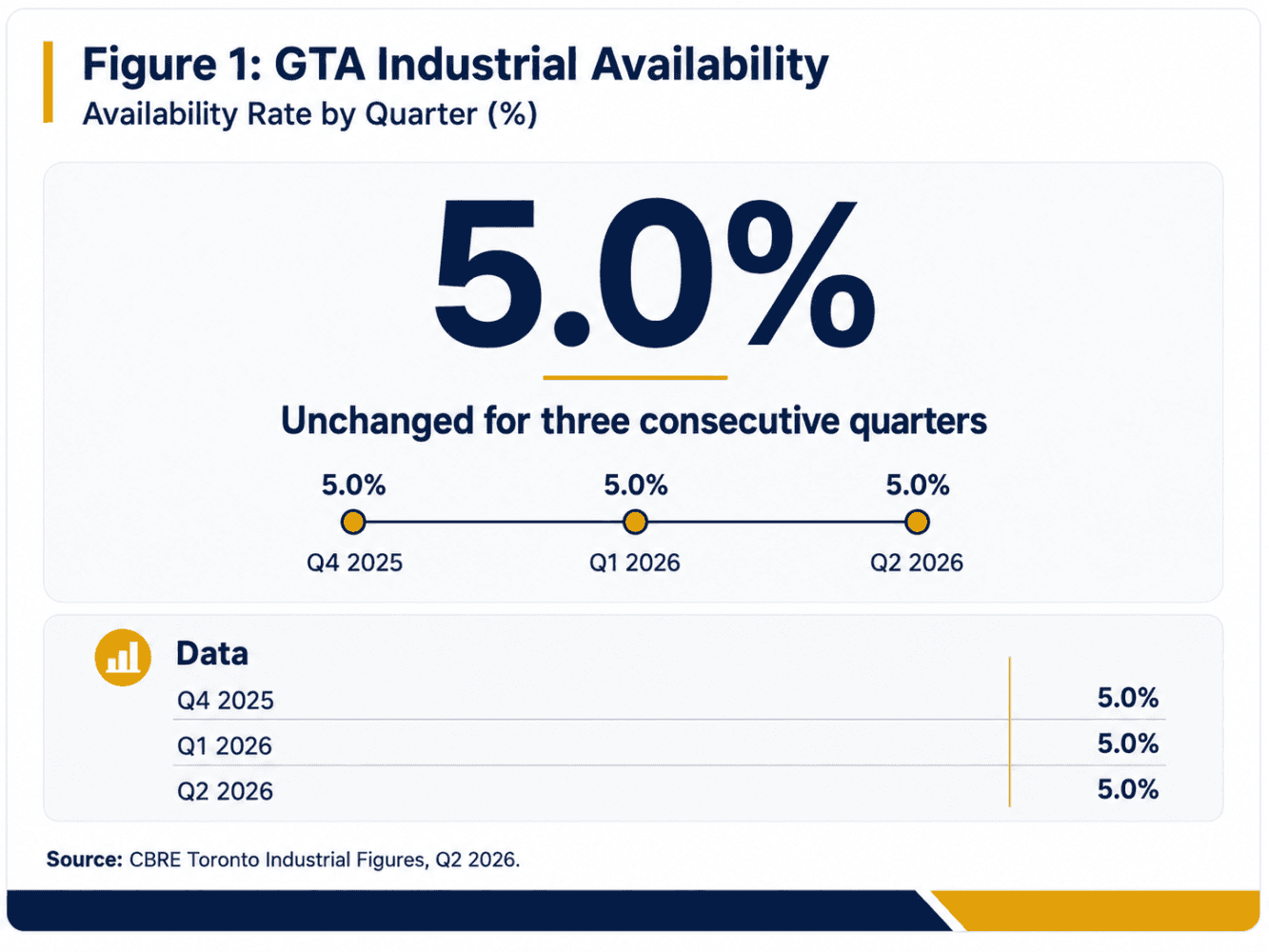
GTA industrial availability currently sits at approximately 5.0%.
The significance is less about the availability rate itself and more about its recent direction. After a period of rising vacancy and significant new supply, availability has begun to level off as leasing activity absorbs more of the space delivered during the recent development cycle.
For property owners, competition for tenants remains meaningful, particularly among comparable properties. Well-located and functional industrial assets, however, continue to differentiate themselves.
For occupiers, current conditions provide considerably more choice than was available during the exceptionally tight industrial market of previous years.
FIGURE 1: GTA INDUSTRIAL AVAILABILITY
Small-Bay Space Continues to Drive Leasing
One of the clearest trends emerging from Q2 activity is the continued strength of smaller industrial spaces.
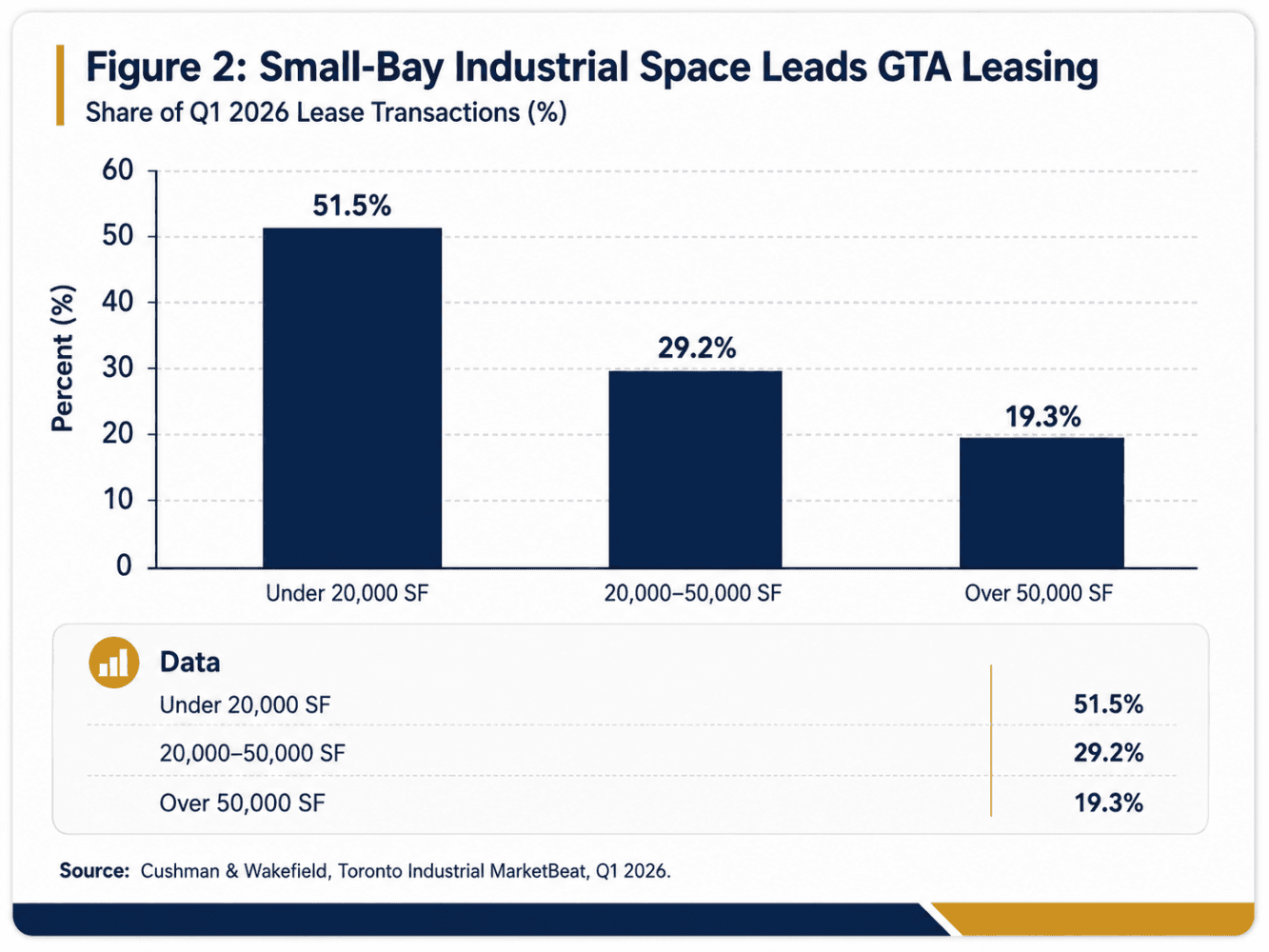
Q2 2026 leasing transactions were distributed approximately as follows:
Below 10,000 sq. ft. — 51.5%
10,000–50,000 sq. ft. — 29.2%
Over 50,000 sq. ft. — 19.3%
More than half of recorded leasing transactions occurred within the small-bay segment.
This reinforces the importance of functional small- and mid-sized industrial properties across the GTA. Local businesses, service companies, trades, distribution users and light-industrial occupiers continue to provide a broad base of demand for this type of space.
For owners of smaller industrial assets, location, shipping capabilities, parking, clear height and overall unit functionality remain important competitive advantages.
FIGURE 2: SMALL-BAY INDUSTRIAL SPACE LEADS GTA LEASING
Positive Absorption Is Supporting Market Stability
The broader Q2 market indicators provide further evidence that GTA industrial fundamentals are improving.
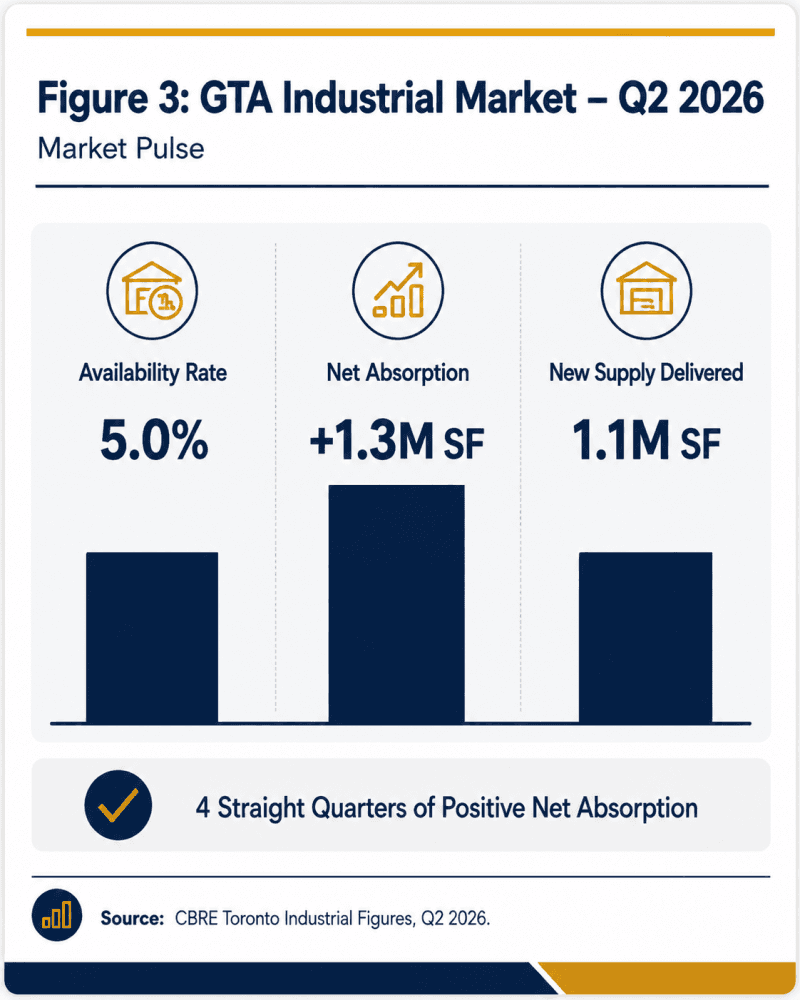
The market recorded approximately +1.3 million sq. ft. of net absorption during Q2, compared with approximately 1.1 million sq. ft. of new supply delivered.
More importantly, the GTA has now recorded four consecutive quarters of positive net absorption.
This means occupied industrial inventory is continuing to increase while the market works through recently delivered space.
Rather than signalling a sudden return to the unusually tight conditions of previous years, the data points toward something more sustainable: a gradual normalization of the GTA industrial market.
FIGURE 3: GTA INDUSTRIAL MARKET — Q2 2026 | MARKET PULSE
What This Means for the GTA Industrial Market
1. More Choice, but Quality Still Matters
Occupiers now have significantly more options than they did during the tightest period of the GTA industrial market.
That creates greater ability to compare locations, building specifications, lease structures and overall occupancy costs.
However, increased availability does not mean every building competes equally.
Well-located industrial properties offering strong shipping access, functional layouts, clear height, parking and appropriate power continue to stand apart from less competitive inventory.
The market is becoming more selective rather than simply oversupplied.
2. Deal Structure Matters More
Headline asking rents provide only part of the picture in today's market.
Current transactions increasingly depend on the complete lease package, including:
Net rental rates
Free-rent periods
Tenant inducements
Landlord improvements
Fixturing periods
Renewal options
Operating costs
Lease flexibility
For owners, understanding competing properties and current transaction economics is becoming increasingly important when positioning available space.
For occupiers, evaluating the total economics of a lease can reveal meaningful differences between otherwise comparable properties.
3. Small- and Mid-Bay Industrial Remains Active
With approximately 51.5% of Q2 transactions occurring below 10,000 sq. ft., the small-bay segment continues to represent an important component of GTA industrial activity.
Mid-sized units between 10,000 and 50,000 sq. ft. accounted for another 29.2% of transactions.
Together, these segments represent the large majority of leasing activity captured in the quarter. That creates continued opportunity for owners of functional multi-unit and mid-bay industrial properties, particularly in established locations where comparable space can remain limited.
4. Asset Quality Is Becoming More Important
As occupiers gain additional options, the differences between competing buildings become increasingly visible.
Industrial performance is becoming more closely tied to fundamentals such as:
Location • Shipping • Clear Height • Power • Parking • Building Condition • Layout • Pricing
New construction continues to appeal to users requiring modern specifications and operational efficiencies. At the same time, well-maintained second-generation buildings can compete effectively through established locations, quicker occupancy and attractive economics.
Brokerage & Investment Perspective
Activity is also improving on the investment side of the GTA industrial market.
Approximately $3.6 billion in industrial assets transacted during the first half of 2026, representing an increase of approximately 15% year-over-year.
The increase suggests that investment capital remains interested in the industrial sector, particularly where assets offer strong locations, stable tenancy and durable long-term fundamentals.
For owners considering a potential sale or acquisition, current conditions make understanding both asset-level fundamentals and comparable market activity increasingly important.
What This Means for Owners & Investors
Transaction Activity Is Improving
Capital continues to participate in the GTA industrial market, particularly for quality industrial and well-positioned assets.
Industrial Fundamentals Are Stabilizing
Positive absorption, stable availability and more measured new supply indicate that the market is gradually moving toward a healthier supply-demand balance.
Asset Quality Matters More
Buyers and tenants remain selective. Location, functionality, tenancy, condition and pricing increasingly determine how individual properties perform.
Market Timing Creates Opportunity
Owners should consider current market value alongside lease rollover, financing requirements, capital expenditures and local demand when deciding whether to hold, lease, refinance, acquire or sell.
GTA Industrial Outlook
The GTA industrial market has not returned to the exceptionally tight conditions of previous years, and the latest indicators suggest a more balanced environment is taking shape instead. Availability has stabilized. Net absorption remains positive. Small and mid-bay leasing continues to lead transaction activity. Investment activity is improving.
For owners, investors and occupiers, the next phase of the market will likely be defined less by broad market swings and more by the performance of individual assets.
Understanding where demand exists, how properties compare and how transaction economics are changing will be increasingly important as the GTA industrial market continues to normalize.
Planning Your Next Commercial Real Estate Move?
Whether you are buying, selling, leasing, relocating or expanding, Stoneleigh Management’s brokerage team provides local market insight and practical guidance throughout the process. Speak with our brokerage team to discuss your property, space requirements or upcoming plans.
Contact SMI Brokerage Services info@stoneleighmgmt.ca | 905-404-6562
VIEW AVAILABLE PROPERTIES: Stoneleigh Management Inc.

This communication is for general informational purposes only and is not intended to solicit clients or properties currently under contract.
Check it out here:

Check out our Socials Below:





Explore two industrial/warehouse units available in Oshawa, offering flexible space and convenient access within Durham Region.
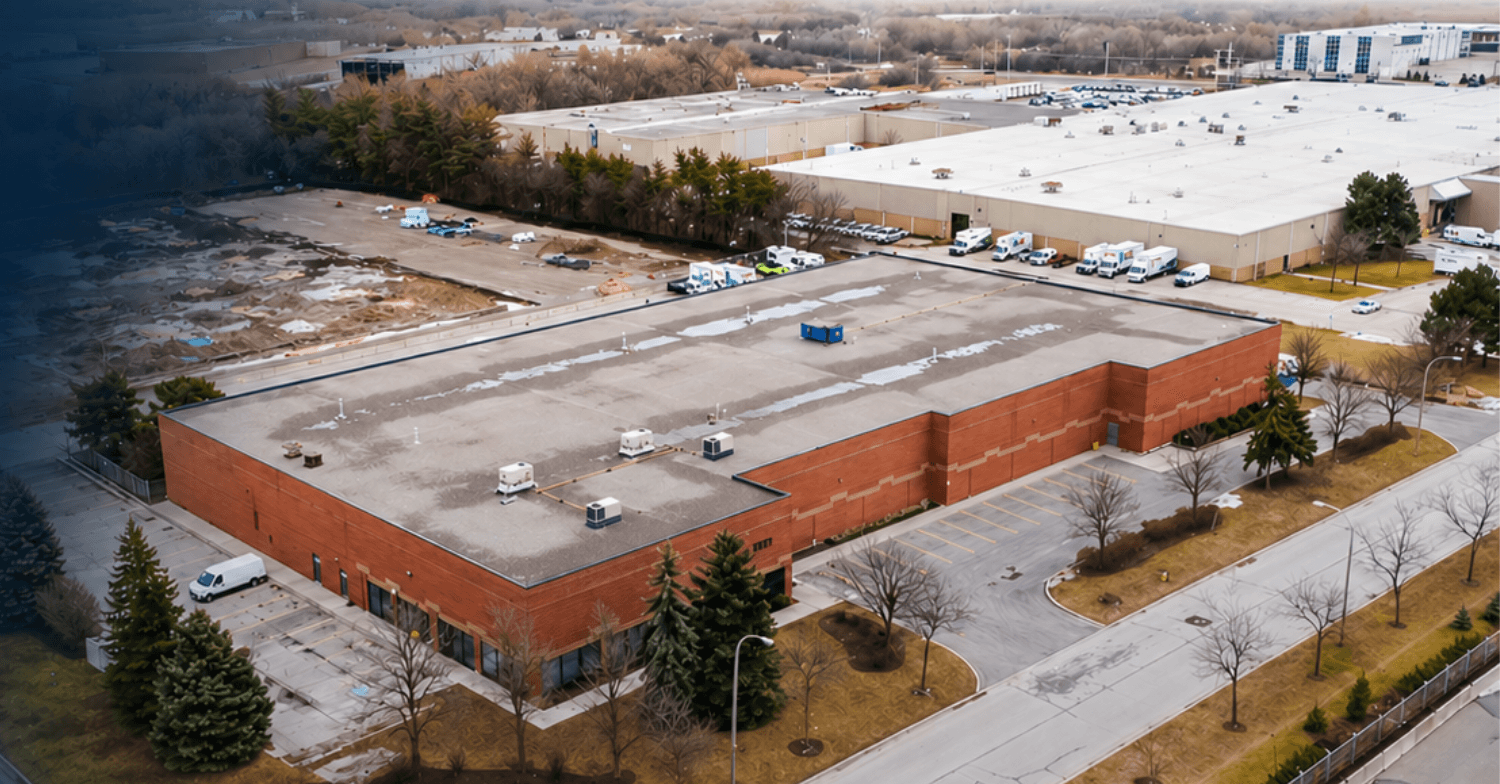
Freestanding 47,337 SF industrial warehouse in Whitby’s established employment corridor, offering full-building functionality and efficient shipping access. Exceptional proximity to Highway 401 provides seamless connectivity across the GTA East and Durham Region.
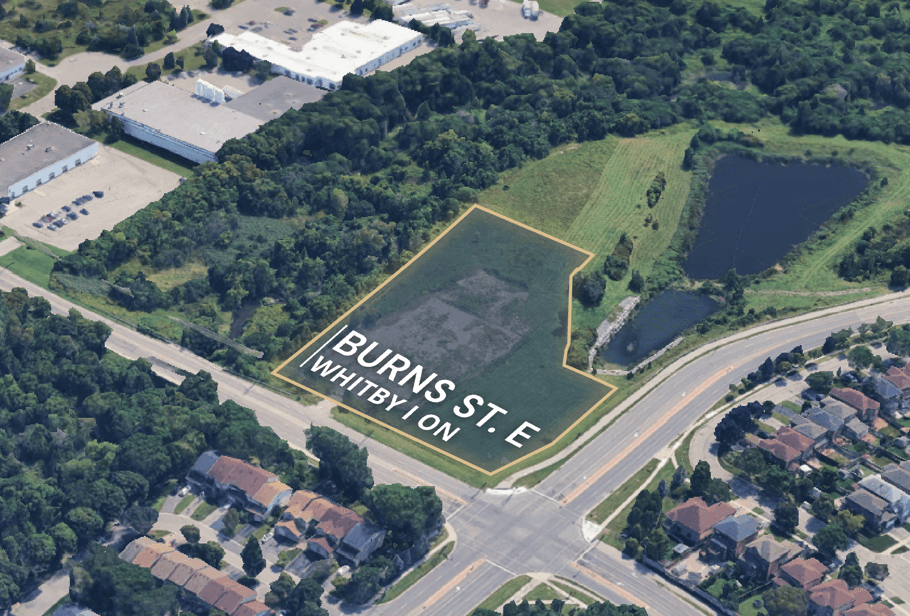
Industrial development land at Burns St. E, Whitby. A rare opportunity within an established employment node, offering flexible use potential and strong positioning for future development. Minutes to Highway 401, delivering seamless access across Durham Region and the GTA East.

Our September Brokerage Report examines key trends shaping the GTA industrial market, including record leasing activity, rising tenant demand, and positive absorption, providing valuable insights for property owners, investors, and businesses.

Our September Brokerage Report examines key trends shaping the GTA industrial market, including record leasing activity, rising tenant demand, and positive absorption, providing valuable insights for property owners, investors, and businesses.
GTA Industrial Market Stabilizes as Small-Bay Demand Leads Leasing